01
Shop by theme
Buyers shop a whole theme, not one product at a time.
Cost, margin and case sizes at a glance.
- Product page: cost, margin and case size
- Planning the Beach shelf (see the deep dive)
Linking big retail & local sellers
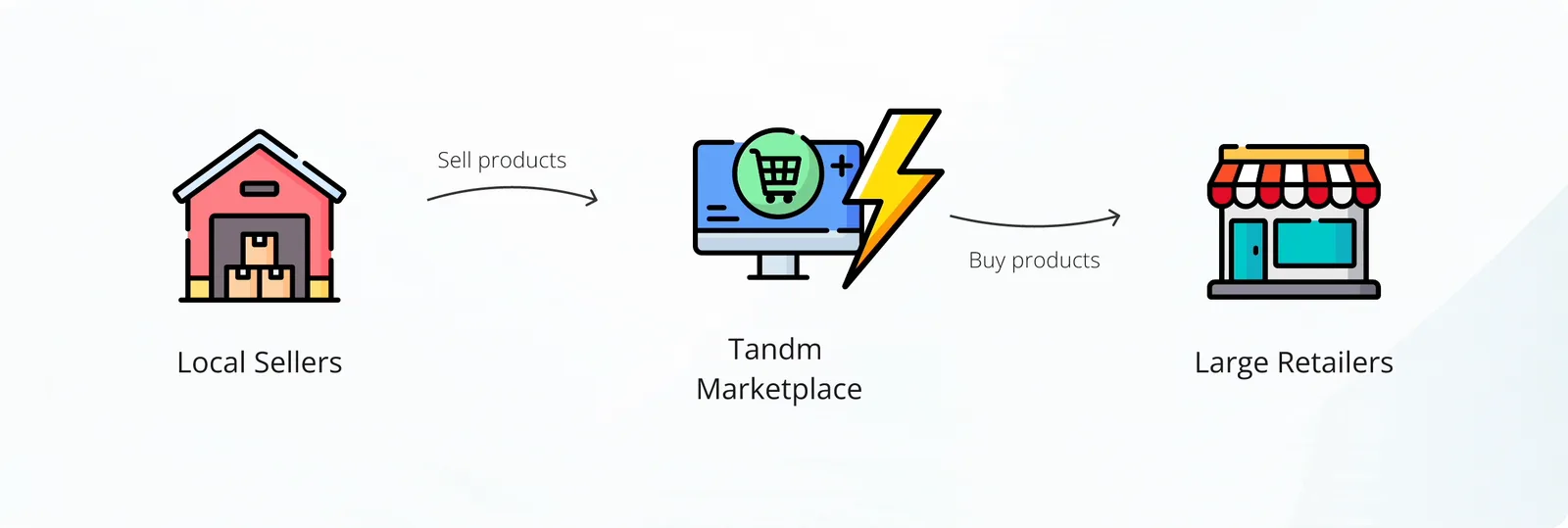
TANDM lets large retailers discover, vet and stock local products, and gives local sellers a direct channel into national retail.
My role
Shaped the product strategy through wireframes with the client and expert users, then co-designed the final UI.
Teammate
Led branding, the design system and the first hi-fi drafts. We refined the designs together.
Timeline
Discovery to hi-fi designs for the buyer, vendor and admin platforms.
At a glance
The problem
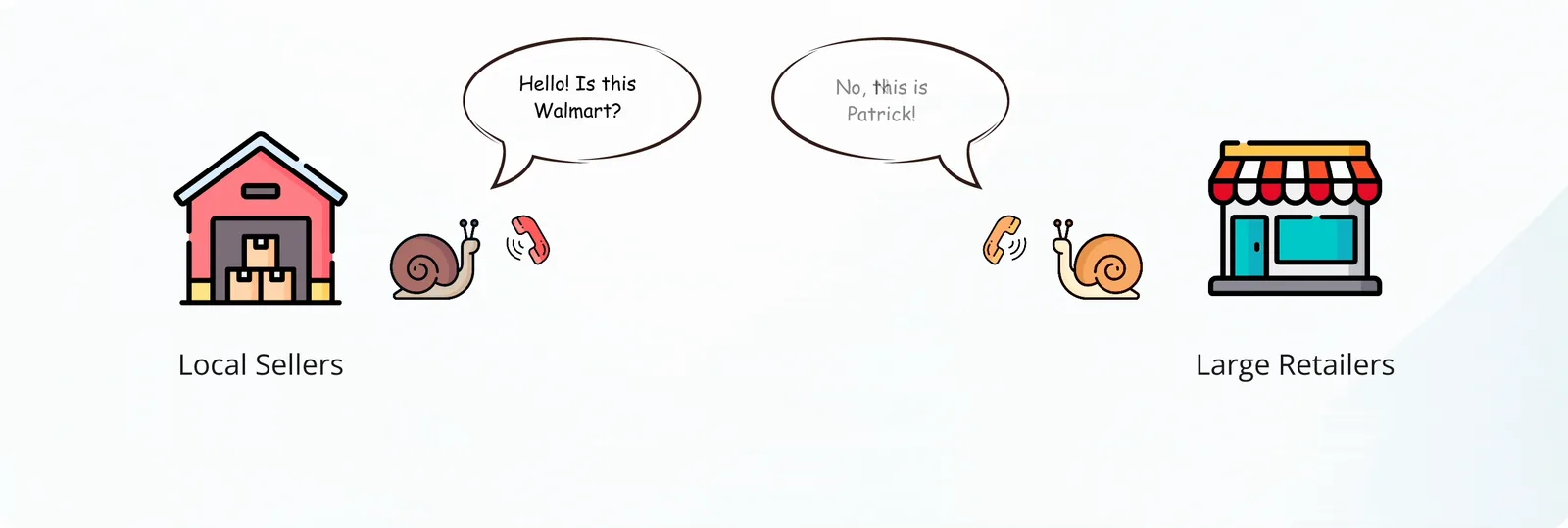
Big retailers like Safeway, Walmart and Target want local products. Getting one onto a shelf meant phone calls to find a viable seller, checking that seller’s reputation, then planning logistics. It took around three months.
Design brief
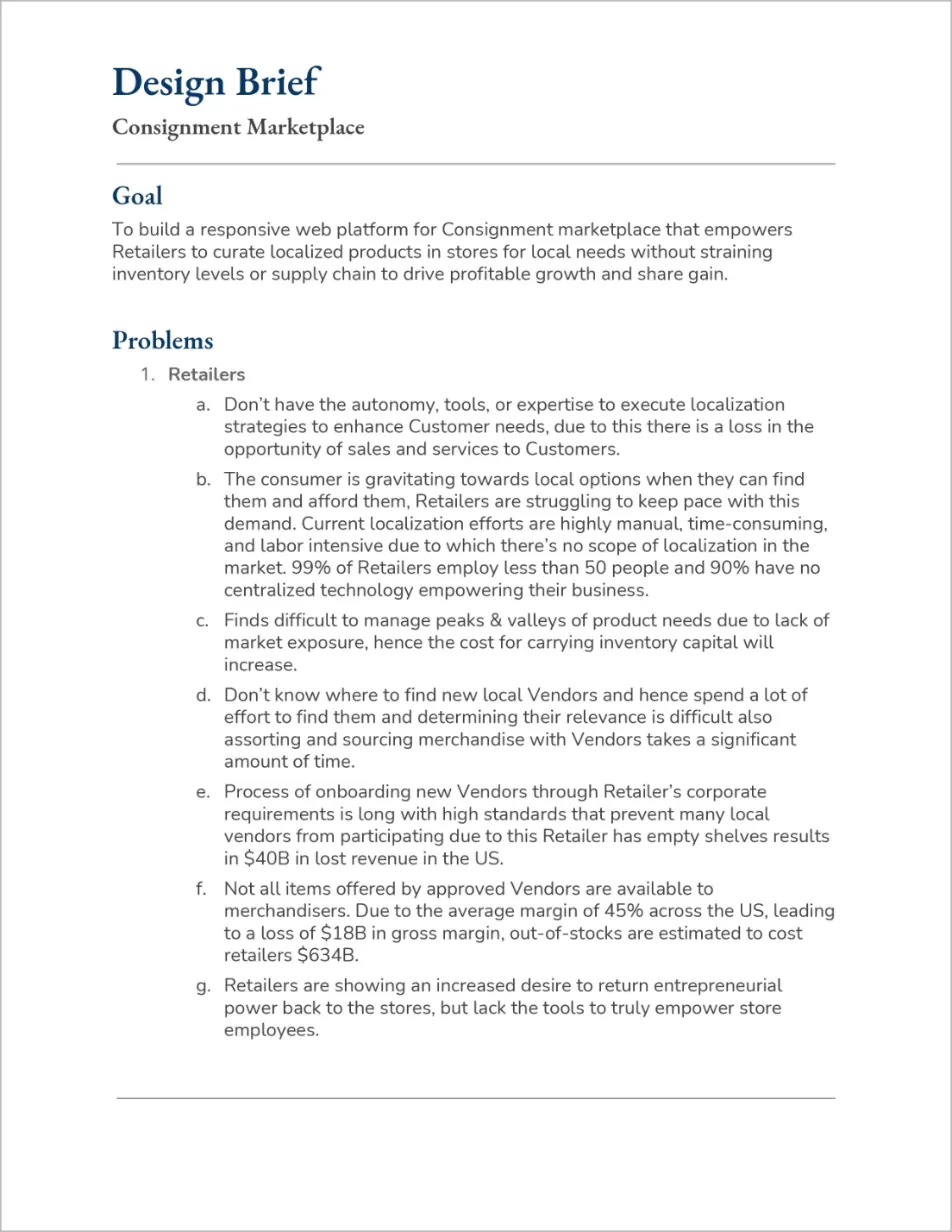
Through talks with the client and interviews with industry experts, I mapped what was hurting each side and wrote it up as a brief, before any screens.
It set one goal: a responsive web platform that lets retailers stock local products for local needs, without straining their inventory or supply chain. And it listed the retailer and seller problems we’d design against.
“It takes a lot of time to get new sellers into our system.”Retail store manager
Sellers
| Paperwork | Big-retail paperwork overwhelms sellers with limited admin resources. |
|---|---|
| Visibility | Hard to get noticed by large retailers and reach bigger markets. |
| Logistics | Deliveries, inventory tracking and returns at scale stretch small sellers. |
Retailers
| Trust | Hard to trust new, unknown local vendors on product quality and reliability. |
|---|---|
| Relevance | Hard to find and verify local products that suit their customer base. |
| Effort | Consignment agreements, payments and sales tracking across many sellers take significant time. |
Competitive study
Before designing anything, I compared four tools in the space (Zoho Inventory, NetSuite, Systum and TradeGecko) on what they do, who they’re for and which problems they solve.
What we took from it
All four handle stock, orders and reporting well. TANDM needed the same basics to be taken seriously.
Each tool helps a business run its own operations. None connects buyers with sellers.
None help a retailer find local sellers, or know which ones to trust. That was the gap TANDM set out to fill.
That confirmed TANDM was worth building.
The solution
3 months → Minutes to find and order
TANDM sits between the two sides, with registration, ordering and fulfilment in one place. Local sellers get seen by national retailers, and retailers get local choice without the phone calls.
| Who | The problem | TANDM’s answer |
|---|---|---|
| Retailers | Hard to find local products that suit their stores. | Buyers pick their categories at sign-up, so relevant local products show up from the first screen. |
| Hard to trust sellers they’ve never worked with. | Sellers are checked for compliance before they can list, and every product carries ratings and reviews. | |
| Sellers | Big-retail paperwork overwhelms small teams. | A guided, step-by-step onboarding, and product listing in retail’s own terms, like casepacks. |
| Hard to get noticed by large retailers. | Their products appear in buyers’ picks and search, and the dashboard shows the views and search appearances they get. |
Giving it structure
With user needs as my guide, I mapped the key interactions as user flows, then iterated on low-fidelity wireframes to set TANDM’s core functionality and patterns.
150+ screens across 20+ buyer and seller scenarios Before any visual design, I wireframed every key path across the buyer, vendor and admin platforms, from onboarding and store setup to search, checkout, consignments and store layouts. Each flow was reviewed with the client and expert users, so the hard decisions were settled in grayscale. Here’s a sample; tap any to open it.
Deep dive
A planogram maps what goes where on a shelf. The client wanted buyers to plan theirs before placing an order.
Why build it ourselves
Existing planogram tools were drawing apps. They fell short in three ways:
No product sizes or shelf depth, so you couldn’t tell if something fit.
No way to see how many rows fit from front to back.
Planning a shelf and ordering for it were separate tools.
Learning the language. I learned merchandiser terms like end caps (aisle-end displays) and facings (units facing forward) so the tool used their words.
My recommendation: build it into Tandm, since no tool checked fit and no competitor had one. The client agreed. It became Tandm’s main selling point and a first step toward a system that tracks stock and reorders on its own.
Finding the middle ground
I explored up to ten variations to find a version both sides could accept.
The flow that bridged it. Any change reopens the editor tab, so buyers never lose their place in checkout.
Mapped and shipped
Try it yourself
Hit “Start Building” and plan a shelf for beach balls and beach towels.
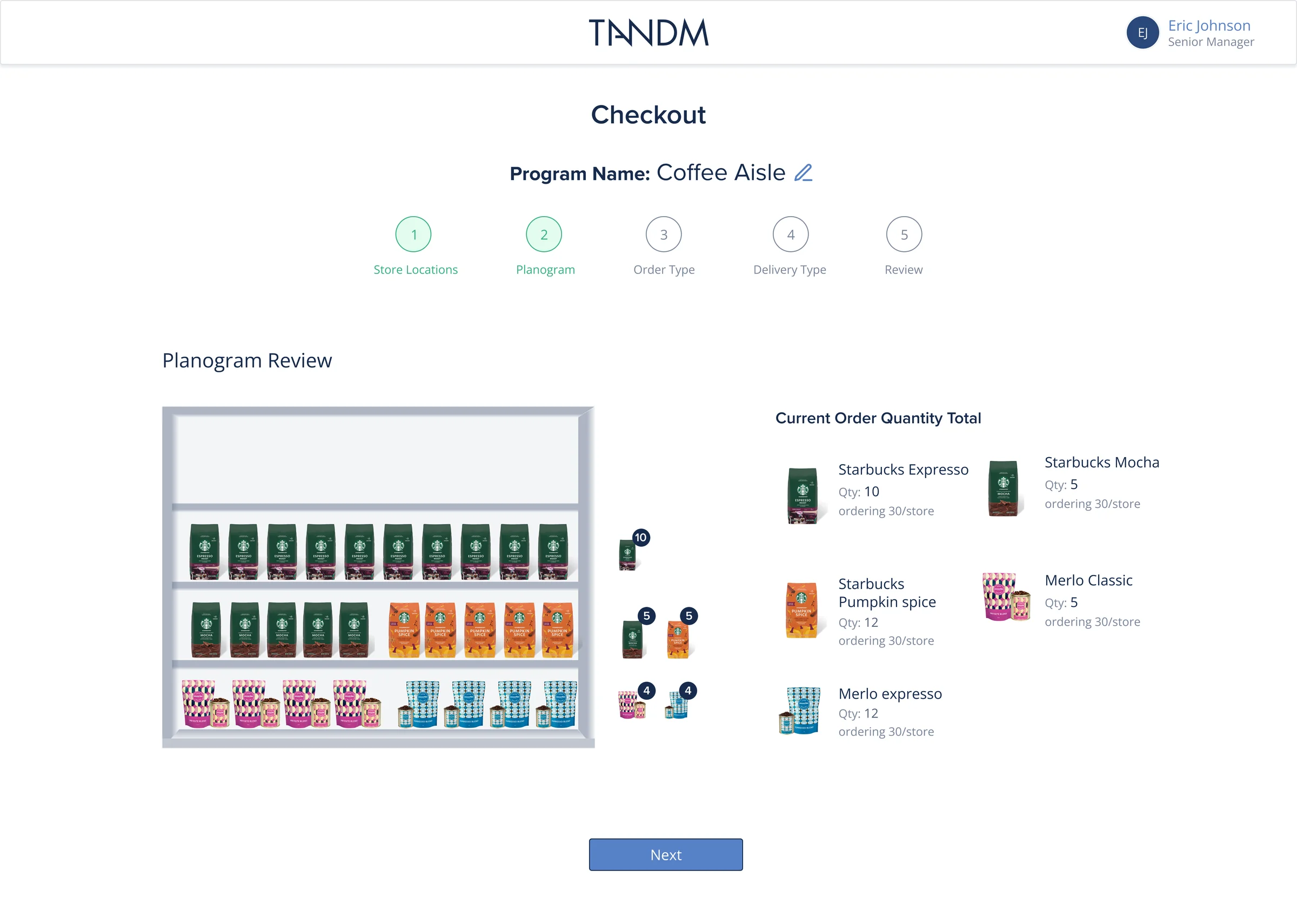
Interactive prototype coming soon
The final solution
Every Tandm order has two sides: the buyer who plans it and the vendor who delivers it. Follow one beach-themed order from shopping to shipping.
I designed the features and flows; the visuals were co-created with Srinivas.
Buyers shop a whole theme, not one product at a time.
Cost, margin and case sizes at a glance.
One order, sent to dozens of stores.
Every store’s units, checked before confirming. One wrong number can waste a truckload.
The vendor side: review retailer orders and arrange delivery.
47 stores in one order: add shipping per store, or upload it all at once.
Outcome
Tandm launched, and to my knowledge went on to raise $200k in funding. The client told me himself how happy he was with the final designs.
It also has to be feasible to build and right for the business. On Tandm I learned to negotiate between those needs and find the version the client, engineers and users could all stand behind.
I worked between a visual designer, engineers, a PM, the client and my own design lead: setting expectations, and keeping everyone working from the same flows, wireframes and specs.